News & Events / February Musings UKG 2026
category
Academics
Little Hands, Big Discoveries
UKG Activity Report – February 2026
February was a month of developing practical skills, creativity and scientific curiosity for the UKG students at The Brigade School.
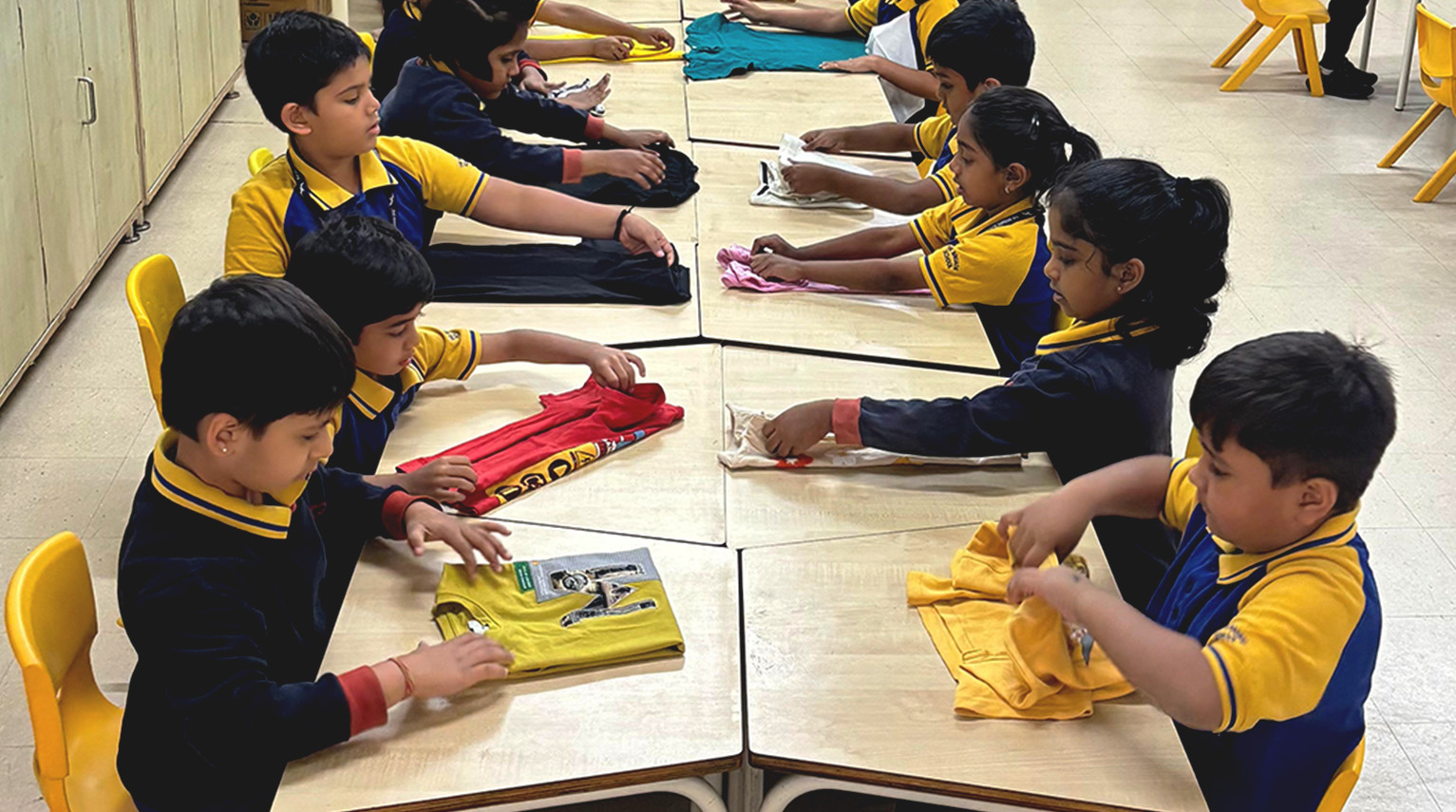
To begin with, in their Value Education class, the students participated in this activity called How to Fold a T-Shirt. In turn this helped them to not only build fine motor skills but also encouraged independence and taking up their own responsibility themselves.
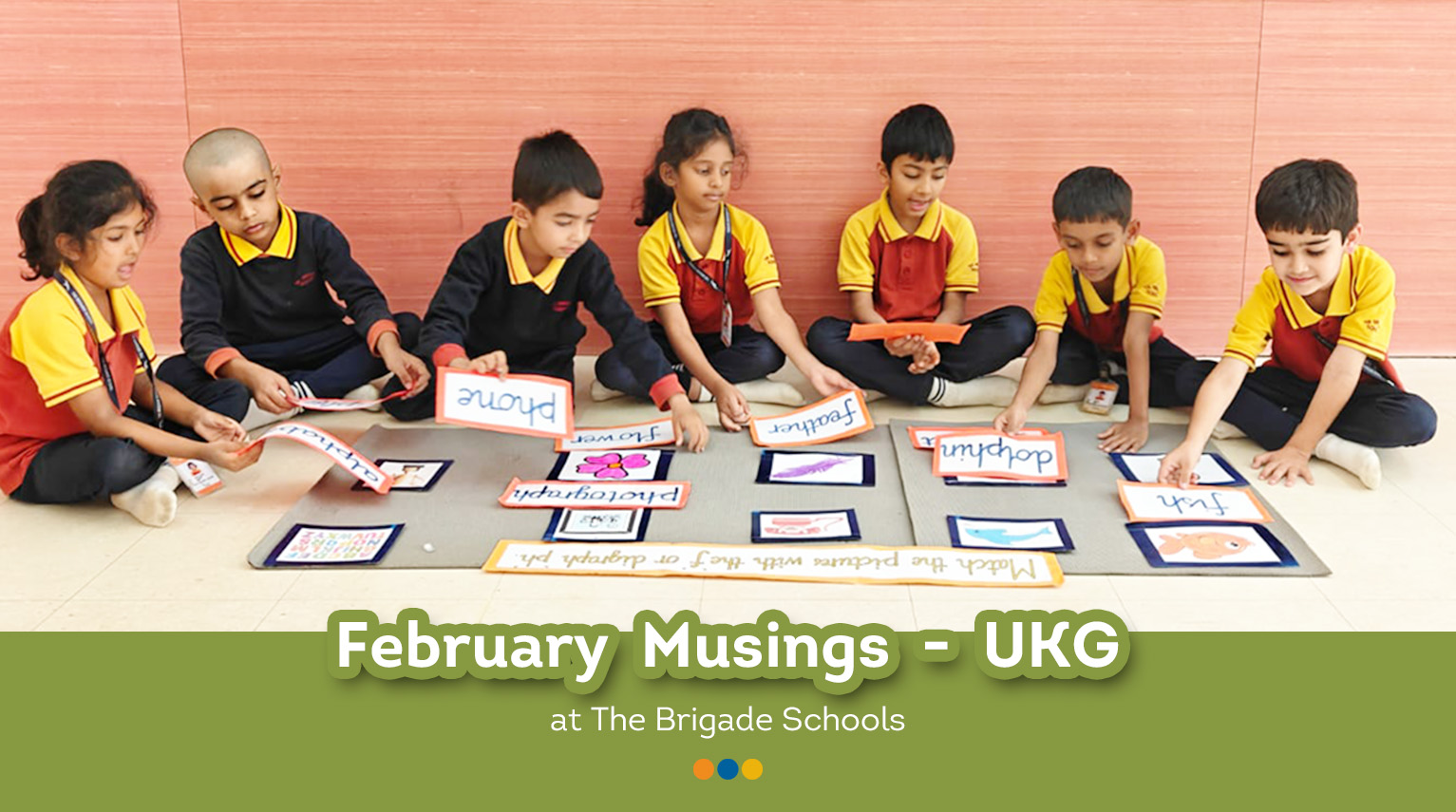
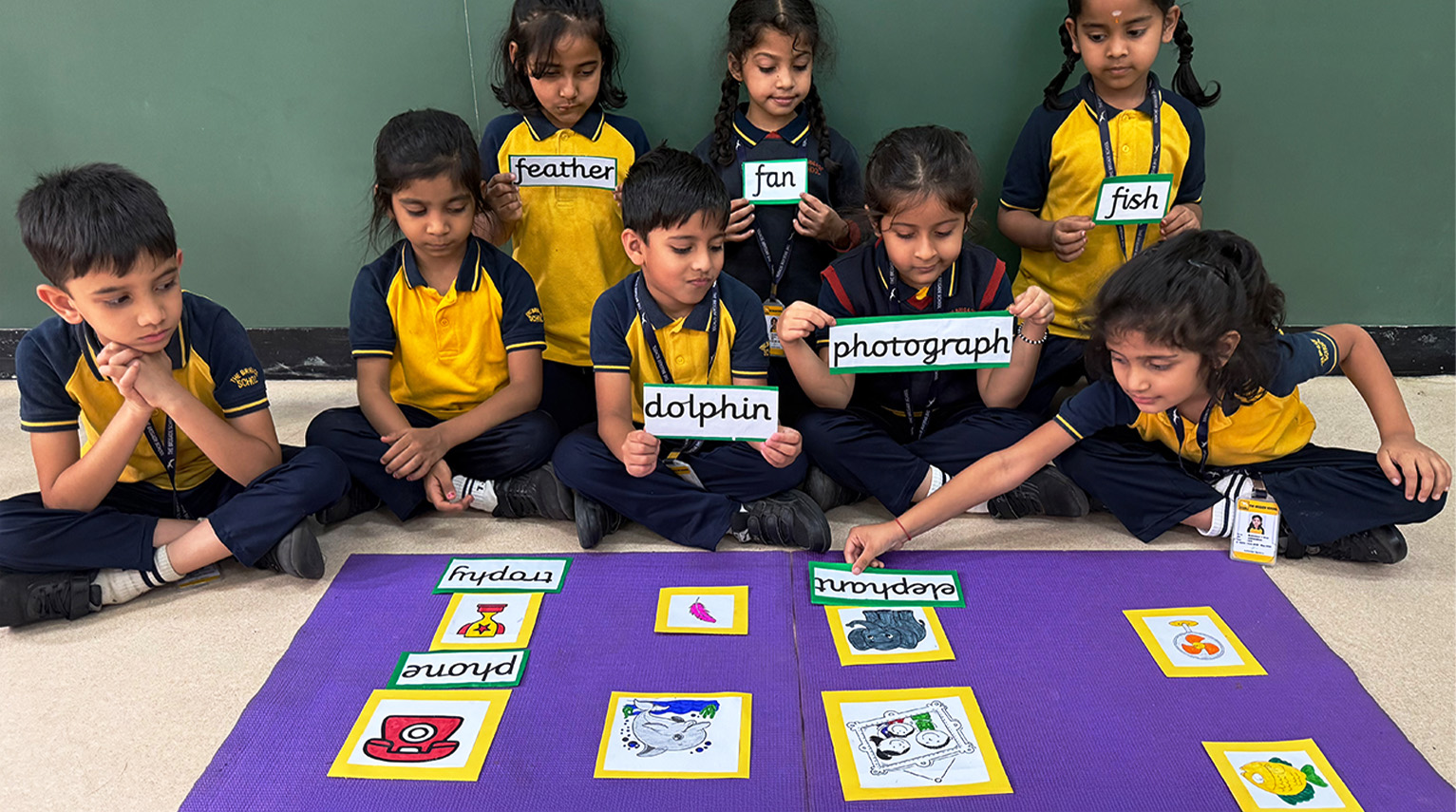
In English, they participated in the ‘ph’ matching activity. Through activity and interactive exercises, the students learnt that ‘ph’ makes the /f/ sound. They recognised words with this sound, and this strengthened their phonetic awareness and decoding skills.
For Organised Games, the students played What’s the Time, Mr. Wolf? This was a fun way of helping them develop their running skills, listening abilities, and strategic thinking.
In Art (APA) class, Madhubani was introduced to the students. Madhubani an Indian traditional art form. The students created vibrant designs using different colours, lines, and patterns, and in turn developed admiration for Indian cultural art forms.
Their Mathematics class focused more on teaching them addition using a more visual format. The students practised addition using pegs, which was a hands-on activity that taught them addition in an engaging way.
In Composite Science, the students learnt to inflate a balloon in a rather fun manner. By using baking soda and vinegar to produce carbon dioxide. This activity is called the Magic Balloon Experiment and it introduced them to the concept of states of matter.
Finally, in Montessori, children worked with the Subtraction Strip Board, helping them understand subtraction and practise basic subtraction combinations through interactive learning.
February was a month of developing practical skills, creativity and scientific curiosity for the UKG students at The Brigade School.
To begin with, in their Value Education class, the students participated in this activity called How to Fold a T-Shirt. In turn this helped them to not only build fine motor skills but also encouraged independence and taking up their own responsibility themselves.
In English, they participated in the ‘ph’ matching activity. Through activity and interactive exercises, the students learnt that ‘ph’ makes the /f/ sound. They recognised words with this sound, and this strengthened their phonetic awareness and decoding skills.
For Organised Games, the students played What’s the Time, Mr. Wolf? This was a fun way of helping them develop their running skills, listening abilities, and strategic thinking.
In Art (APA) class, Madhubani was introduced to the students. Madhubani an Indian traditional art form. The students created vibrant designs using different colours, lines, and patterns, and in turn developed admiration for Indian cultural art forms.
Their Mathematics class focused more on teaching them addition using a more visual format. The students practised addition using pegs, which was a hands-on activity that taught them addition in an engaging way.
In Composite Science, the students learnt to inflate a balloon in a rather fun manner. By using baking soda and vinegar to produce carbon dioxide. This activity is called the Magic Balloon Experiment and it introduced them to the concept of states of matter.
Finally, in Montessori, children worked with the Subtraction Strip Board, helping them understand subtraction and practise basic subtraction combinations through interactive learning.