News & Events / Grade 3 TBS – Maths – Comparison of Like Fractions
category
Academics
Grade 3 TBS – Maths – Comparison of Like Fractions
“Learning Fractions the Colourful Way – Comparing Like Fractions Through Creativity!”
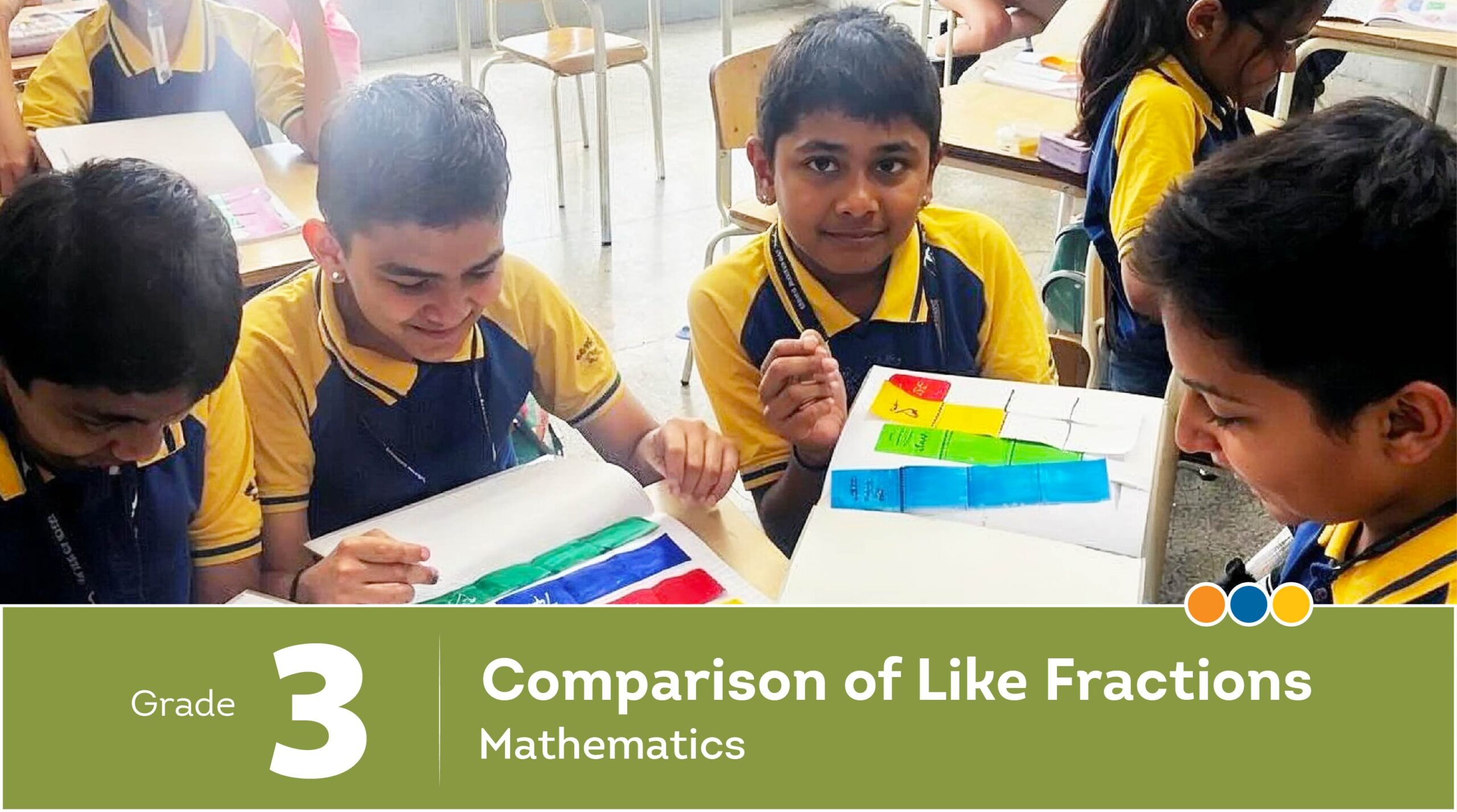
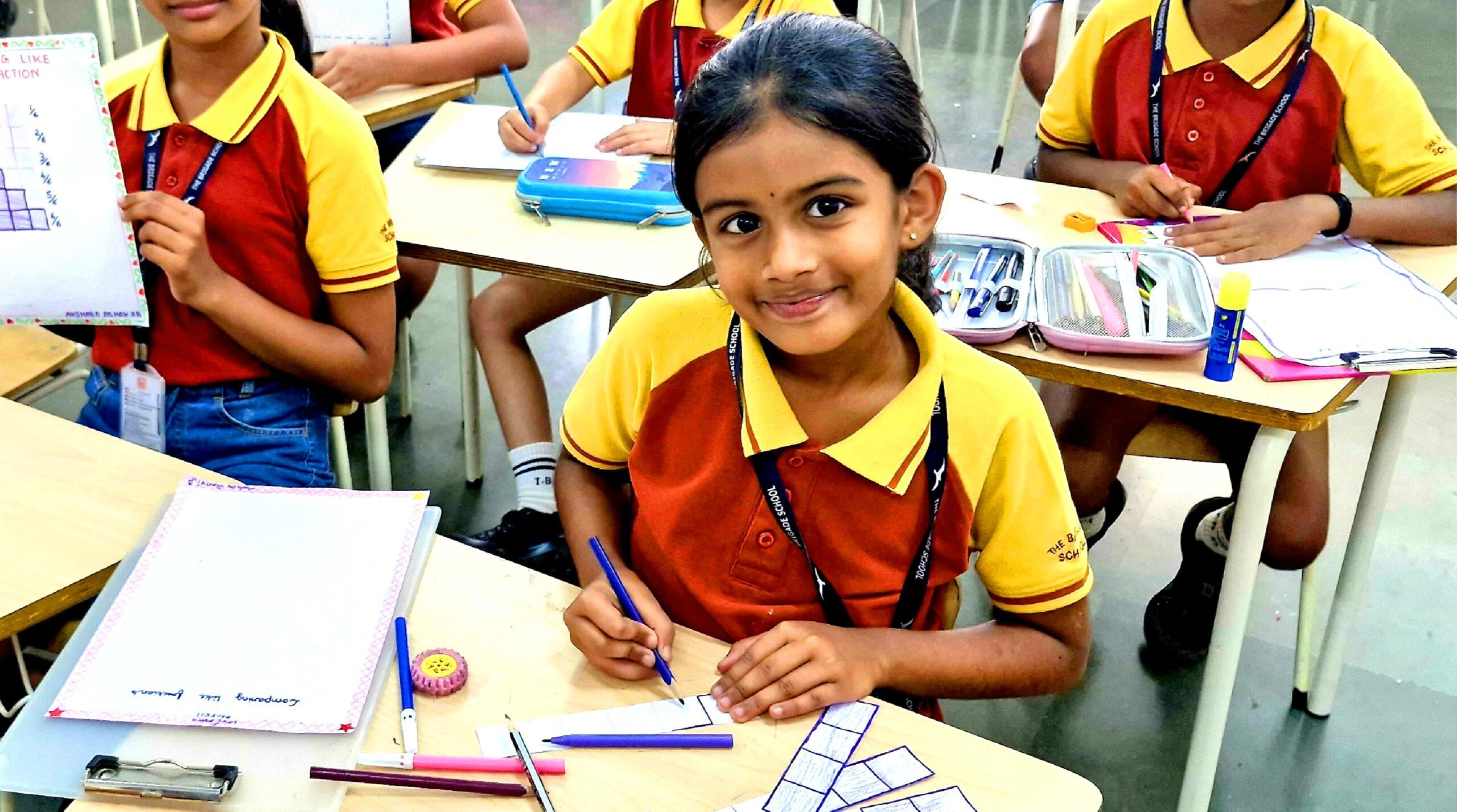
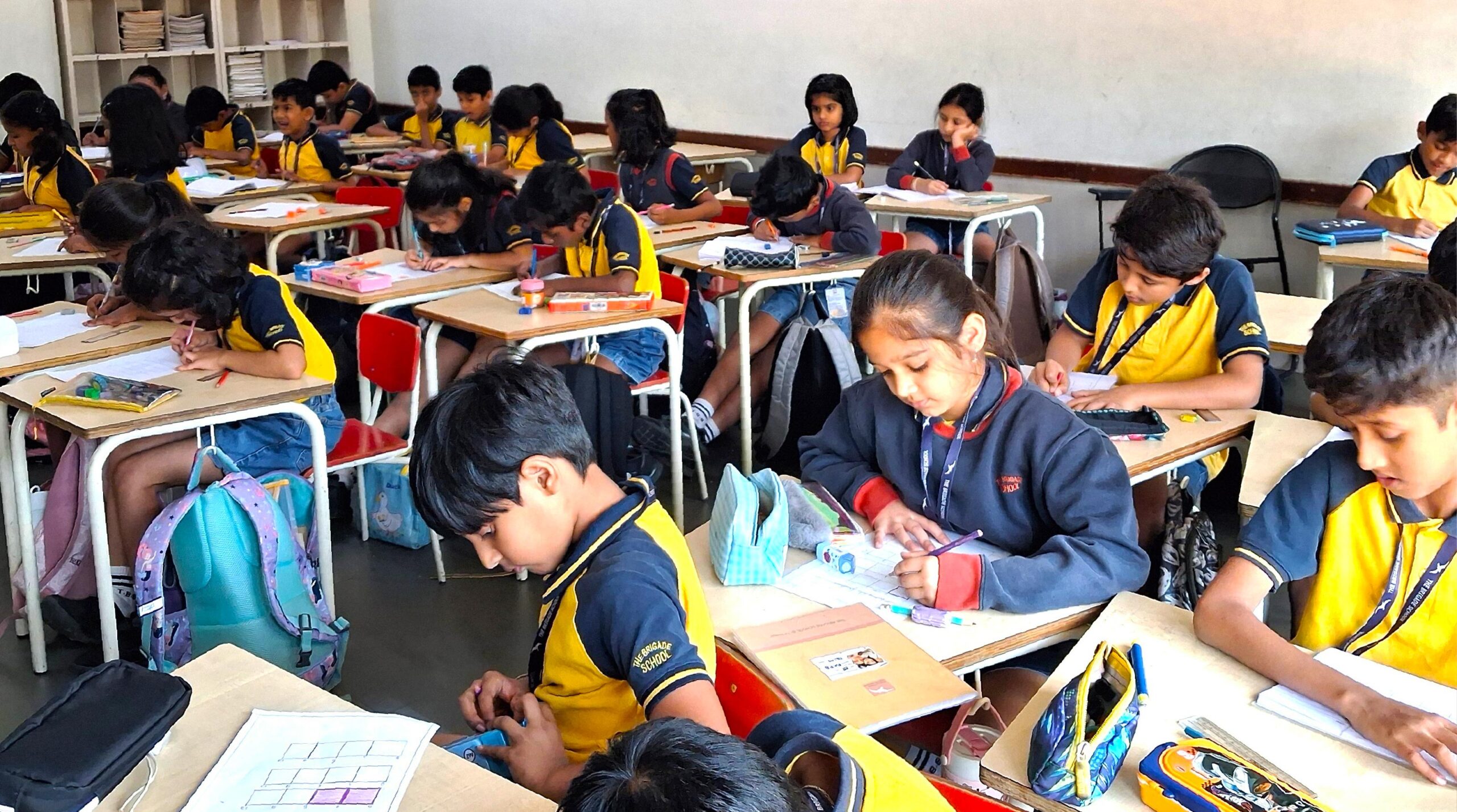
Understanding fractions becomes more meaningful through hands-on learning. In this activity, students explored comparing like fractions in an interactive way, focusing on fractions with the same denominator. Each student received equal-sized paper strips and crayons. They folded four strips into four equal parts and shaded 1, 2, 3, and 4 parts respectively.
By observing their coloured strips, students visually compared the fractions and identified which were larger or smaller. They discovered that when denominators are the same, the fraction with the greater numerator is larger. The activity also encouraged creativity, as students used colours to decorate their work.
Many extended their learning by creating strips divided into 5, 8, and 10 parts to compare additional fractions. Overall, the activity was engaging and effective, helping students independently understand the concept while fostering curiosity, participation, and a deeper grasp of fractions through experiential learning.
“Learning Fractions the Colourful Way – Comparing Like Fractions Through Creativity!”
Understanding fractions becomes more meaningful through hands-on learning. In this activity, students explored comparing like fractions in an interactive way, focusing on fractions with the same denominator. Each student received equal-sized paper strips and crayons. They folded four strips into four equal parts and shaded 1, 2, 3, and 4 parts respectively.
By observing their coloured strips, students visually compared the fractions and identified which were larger or smaller. They discovered that when denominators are the same, the fraction with the greater numerator is larger. The activity also encouraged creativity, as students used colours to decorate their work.
Many extended their learning by creating strips divided into 5, 8, and 10 parts to compare additional fractions. Overall, the activity was engaging and effective, helping students independently understand the concept while fostering curiosity, participation, and a deeper grasp of fractions through experiential learning.